Meaningful Activities in Our Care Homes
What makes life in a care home enjoyable is usually the ordinary...
Learn more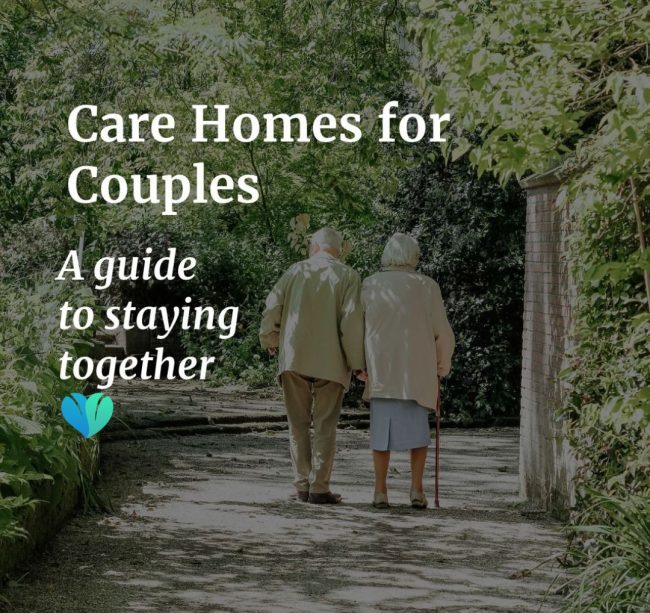
5 November 2026
A morning cup of tea together. Sitting in the garden. Knowing your partner is just along the corridor, or in the next chair. Those everyday comforts are so important.
Moving into a care home is a big decision at any time of life. When you have spent decades with the same person beside you, and one or both of you need more support, there is one more question to be answered. Can you stay together?
The short answer is yes. Couples move into care homes together all the time, and there are more ways of doing it than most families realise. This guide shares the options available, what to ask if you’re interested in a couples stay, and what day to day life could look like.
Some care homes are able to accommodate couples in a shared room or separate rooms within the same home. The right arrangement depends on each person’s care needs, what they prefer and what accommodation is available.
At Tanglewood, we’ve provided care and support to residents and their families since opening our first care home in 1989. With over 35 years of experience in residential, nursing and dementia care, we know how important it is to find the right support for each person’s individual needs. We work closely with residents, families and healthcare professionals to develop Personalised Care Plans that reflect their needs and preferences.
We understand that choosing care is a personal decision. Drawing from our experience, we’ve created this guide that explains what to consider, which questions to ask and how to find support that respects you as individuals and as a couple. The funding information relates to England.
Yes, couples may be able to move into the same care home. Each of you may need a different level of care, as long as the home is able to meet both.
For example, one person may need help with washing, dressing and moving around, while their partner needs less assistance. One partner may need dementia support, while the other needs residential care.
Before making arrangements, discuss each person’s situation with the home manager. Ask about room options, the care the home provides and how the team would help you spend time together. Living in the same home may mean separate bedrooms or different parts of the building.
Several of our care homes have double rooms designed for two people, with a shared en suite and space for your own furniture. You share a room much as you always have, and each of you has your own Personalised Care Plan and a care team supporting you.
Double rooms are limited and availability frequently changes, so it is always worth asking a home directly rather than assuming one way or the other.
At Tanglewood Bingley Park and Tanglewood Gateford Lodge there are interconnecting rooms, which sit somewhere between a double room and two separate rooms. You each have your own bedroom and your own en suite, with a private door between the two.
During the day the door stays open and the two rooms work as one. At night you each have your own bed and your own routine. It suits couples who want their own quiet space while still being able to walk through to each other whenever they like, and it works well when one partner needs support during the night that would otherwise disturb the other.
Some couples would rather have their own space and still be a few steps apart. Neighbouring rooms, or rooms on the same floor, give you that freedom and flexibility. You spend the day together, eat together, and have somewhere of your own to retreat to at the end of the day.
This also works well when one person’s care needs are much higher than the other’s, or when sleep patterns have drifted apart over the years.
At Tanglewood Horncastle there are four self-contained bungalows in the landscaped grounds of the care home. Each one has its own front door, kitchen, sitting room and garden space, and the home’s care team supports you there just as they would any of the residents in the home.
For couples who want the independence of their own place with care close by, it is the most private of the options available.
Our homes offer different accommodation, so it is worth starting with the locations that describe options for couples.
York Manor in York has three companion rooms for couples or close companions, alongside its single bedrooms. The home provides residential and dementia care, and its bedrooms have en suite wet rooms.
Lindley Park in Huddersfield has premium rooms suitable for couples with residential, dementia and respite care available.
Ask your preferred Tanglewood home about suitability, room layout, fees and availability for you both.
Depending on your personal needs, the choice of home is more important than the choice of room.
A home that is registered for residential care alone may not be able to support a partner who later needs complex nursing care. If that happens, one of you may have to move.
Care homes that offer residential, dementia, nursing and respite care give you far more room to manoeuvre. Your care can change over the years without either of you having to pack a bag.
When you visit a new care home and meet the team, find out what they’re registered to provide, and ask what would happen if one partner’s needs increased significantly.
Each partner needs an individual assessment and care plan. The best care teams will consider each person’s needs, preferences and wishes, alongside your relationship as a couple. At Tanglewood, we assess each person before they move in, which helps us understand their care needs, personal routines and preferences. We use that to develop a Personalised Care Plan and to establish whether the chosen home is suitable.
Different types of care is available:
Ask whether the home can provide the combination of care you both need. If one person needs a specialist area of the home, discuss how this would affect your accommodation, visits between rooms and time together.
If one of you is independent and the other needs support, explain this when you enquire. Ask:
A partner without care needs may be able to move in, but this is not automatic. Each home may offer different arrangements.
Care needs can change over time. Ask what care the home can continue to provide and when you might need a different arrangement.
Even if a home offers several types of care, your individual circumstances will determine whether you can stay in the same room or home. Discuss how the home’s care team would make these decisions and consider your wish to remain close.
One partner moving in first is common, and being apart does not have to be permanent.
John and Valerie married in 1961 and have shared 65 years together. When John became seriously unwell he went into hospital and then to a care home in Boston to recover, while Valerie moved into Toray Pines care home, as living at home on her own was no longer possible. They spent more than ten weeks apart.
When John was asked whether he would like to move to Toray Pines and share one of the home’s double rooms with Valerie, his answer was immediate. “Yes, absolutely.”
After weeks of planning between their family, social workers and both care teams, they moved into their room together. Valerie had a birthday shortly afterwards. Asked what her favourite present was, she said it was having John beside her again.
This arrangement was specific to Toray Pines. Ask your preferred Tanglewood home about suitable options and current availability.
Jean and Ivan at Tanglewood Beeston Rise had been married 69 years and had never spent more than five days apart until illness put them in separate hospitals for five weeks. They are back together now, at the same home. Their advice to younger couples is worth passing on. “Just be kind to one another.”
If one of you is already in a home and you want the other to join, say so. Ask to be put on the list for a double room, and ask the home manager what the process looks like. It is a conversation they will have had before.
Every couple has their own reasons for exploring care. Sometimes both people need regular support. Sometimes one partner has quietly been doing the caring for years and finds the responsibilities harder to manage.
John and Chris had been married 64 years and had both worked in education, travelling widely together and spending as much time in Asia as they could. As John’s health declined, Chris became his main carer and took real pride in looking after him. When her own health declined too, they chose Tanglewood Trent Bridge together, so that they could both be looked after for a change.
That phrase is the heart of it. Moving into a home as a couple can give back the part of a marriage that caring had slowly taken over. Everything you had been doing on your own now has a team behind it. A trained care team for washing, dressing and medication. A kitchen team cooking meals. A housekeeping team on the laundry and the cleaning. A lifestyles team filling the day with something to do.
John’s view on a happy marriage, after six decades of it, was simple. “Never go to bed on an argument.”
The caring partner’s wellbeing matters too. Discuss what they feel able and willing to do, and what support they need themselves.
Living together in a care home does not mean doing everything together. The couples who settle best tend to be the ones who keep a bit of their own life going alongside the shared one.
Ann, married to Colin for 64 years, put it better than we could when asked the secret to long lasting love. “Have a common ground that you both can enjoy things you like together, but it’s just as important that you make time for your own friends and interests too.”
A good home makes both possible. There will be activities you go to as a pair and activities you go to alone, your own friendships on your corridor, and visitors who come to see one of you rather than both.
At Tanglewood, our lifestyles team get to know residents’ interests and preferences. That helps us offer opportunities to connect with others while recognising that each person enjoys different things. Learn more about activities and daily life.
Day to day, less changes than families expect. You wake up together, have breakfast together, and decide between you what the day looks like. Anniversaries and birthdays are celebrated properly.
Richard House celebrated Gordon and Lillian’s 71st wedding anniversary in 2024, marking the life and the family they had built together. You can read about their wedding anniversary celebration.
Tony and Margaret celebrated their 62nd anniversary at Hunters Creek. Tony’s advice was “always listen to the wife.” Margaret’s was “always listen to each other.”
At Tanglewood Lindley Park, couples were invited in for a champagne reception, a candlelit lunch cooked by the home’s chef and an afternoon tea dance. Sue and Peter have been married 64 years, having met at a tennis club 69 years ago. “Every time I see Sue, it feels like a first date,” Peter said.
Anna Chan, who manages the home, said, “Love doesn’t stop at any age.”
The practical support of a care home gives you back time to spend with each other. At Tanglewood, weekly fees typically include meals, laundry, housekeeping, personalised care and social activities. Your quotation and agreement will set out exactly what is covered.
Before you move in, we will talk through favourite foods and any dietary requirements as part of your assessment. Our teams encourage residents to make their room their own with photographs, keepsakes and favourite belongings, and if there is furniture you would like to bring, ask the manager what the room can safely take.
Tell the care team which routines matter to you. You may enjoy breakfast together or prefer a quiet afternoon. You may want to keep celebrating birthdays and anniversaries with family. Being near someone who knows you well offers real reassurance during a move, and keeping familiar routines helps you both settle.
Visiting times at Tanglewood are open, so family and friends can come and go as they please. Shared spaces and facilities are different at every home. For example, York Manor has a family room, a quiet room, a café bistro and terraces. Lindley Park has a café, a garden lounge and landscaped gardens. When you look round, find the spots where the two of you could sit with a cup of tea or see family, and ask how you can use them.
It is worth asking about time together and personal choices while you are there. Where can you sit together? How do mealtimes work? Which activities might you enjoy? How can the care team respect your privacy?
Our frequently asked questions cover more on visiting, belongings, food and life in our homes.
Fees for couples vary, because they depend on what care each of you has been assessed as needing, which home you choose and the accommodation you go for.
At Tanglewood, weekly fees are based on the care each person needs and the room they choose. Ask for a written breakdown for both of you, so you can see the full cost and what sits inside it.
Worth checking:
Sharing a room may still mean paying separate care fees, as the care is assessed and delivered individually. Have a look at our fees and pricing breakdown and talk your own circumstances through with the home manager.
If you are likely to need support from your local council, ask how it will assess each person’s care needs and finances. Being a couple does not mean you will automatically be given a joint funding award.
Property, savings you hold jointly and income all raise questions of their own. Whether one of you stays at home or you both move into care can affect how the council treats your property.
This is the point to get advice rather than act quickly. Before you sell your home or make other financial changes, speak to the council and to an independent adviser who has experience in care funding.
Some people qualify for National Health Service (NHS) Continuing Healthcare, based on their assessed health needs. Eligibility is worked out for each person individually, so if one of you qualifies, it does not follow that the other will.
Our funding and financial support information explains the main options worth exploring.
A short stay is a gentle way to find out how care feels before you commit to anything longer. Tanglewood offers respite care, which is a temporary stay with care and support included. Whether both of you can stay depends on your assessments and on suitable accommodation being free at the time.
Worth asking:
While you are staying, talk between yourselves about how well the care, the accommodation and the daily routine suit you both.
One thing to be clear on. A trial stay does not hold the same accommodation for you permanently. If you would like to extend the stay or change the arrangement, the home manager will talk you through what happens next.
Find out more about respite care at Tanglewood.
Visit together where you can, and give each of you the time to say what matters most. Alongside the accommodation and the care, think about the atmosphere of the place, where it is and how easily your family can get to you.
These are the questions worth taking with you:
Our guide to choosing the right care home has more to take along on the visit.
Tanglewood has homes across Lincolnshire, Nottinghamshire, Yorkshire, Leicestershire and the North West, with couples living together in several of them. Our homes offer residential, dementia, respite, day and palliative care, and some are also registered for nursing care, which means your care can change over time without you having to leave or be apart.
Finding the right care comes down to understanding what matters to you both and what support each of you needs. You might be hoping to share a room, to live close to one another, or to arrange care for one of you for now. Having the conversation early gives you more options.
Get in touch with the Tanglewood home you have in mind and we can talk through individual assessments, what accommodation would suit you, what is available and what it costs. Our team will explain what the home offers and arrange a visit for you.
Download our brochure to see our rooms and facilities, find your nearest home, or book a viewing and come and see it together.

3 November 2026
What makes life in a care home enjoyable is usually the ordinary...
Learn more
29 October 2026
Finding the right care home with the best facilities for yourself or...
Learn more
29 October 2026
October has been a vibrant and exciting month at Humberston House Care...
Learn more